Fresh Chimichurri Sauce – Easy & Flavorful Recipe
Chimichurri sauce is the vibrant, herbaceous elixir that can transform any grilled masterpiece into a culinary event. If you’ve ever savored a perfectly cooked steak or tender chicken fresh off the grill, chances are it was elevated by this Argentinian delight. But what exactly is it about chimichurri sauce that makes it so universally adored? It’s the incredibly fresh, zesty symphony of parsley, cilantro, garlic, and vinegar that awakens your palate with every bite. It’s not just a condiment; it’s an experience. The secret lies in its simplicity and the quality of its fresh ingredients, creating a flavor profile that is both bold and beautifully balanced. Prepare to unlock the magic of this iconic sauce and elevate your own cooking to delicious new heights.
Chimichurri Sauce
There’s something truly magical about a vibrant, herbaceous sauce that can instantly elevate even the simplest of dishes. For me, that magic is found in chimichurri. This Argentinian classic is more than just a condiment; it’s a flavor explosion waiting to happen. Think bright, zesty, garlicky, and herbaceous – a perfect foil for grilled meats, roasted vegetables, fish, and even as a dip for crusty bread. Forget those bottled versions; making chimichurri from scratch is incredibly easy and the taste is incomparable. The fresh herbs, tangy vinegar, and rich olive oil meld together into a symphony of deliciousness. It’s the kind of sauce that makes you want to lick the spoon!
The beauty of chimichurri lies in its simplicity and the quality of its ingredients. You don’t need fancy equipment, just a good knife, a bowl, and a whisk. The process is all about finely chopping fresh ingredients and letting them mingle. I’ve found that the ratio of herbs to other ingredients is key to achieving that perfect balance. Don’t be afraid to adjust the spice level or the tangin extractess to your preference. This recipe is a fantastic starting point, but chimichurri is wonderfully forgiving and adaptable.
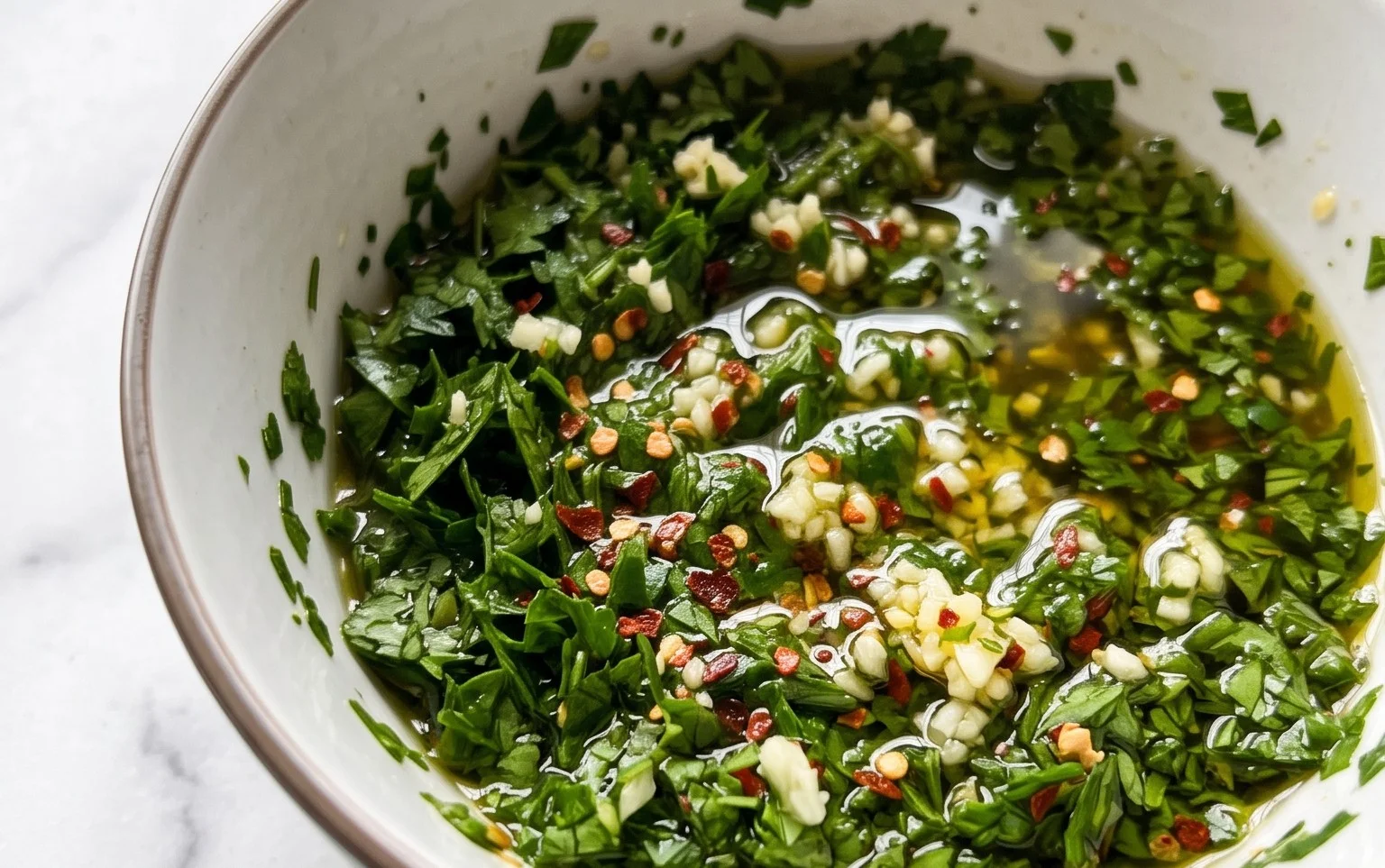
The aroma that fills your kitchen as you prepare this sauce is non-intoxicating. The fresh parsley and cilantro create a verdant base, while the oregano adds a subtle earthiness. The red onion and garlic bring a pungent kick, tempered by the bright acidity of the red grape juice vinegar and fresh lemon juice. Finally, the olive oil brings it all together, creating a luscious emulsion that coats everything it touches with incredible flavor.
I love making a big batch of chimichurri and keeping it in the refrigerator. It lasts for about a week and is incredibly versatile. It’s not just for steak! Drizzle it over grilled chicken, pan-seared salmon, roasted potatoes, or even use it as a base for a salad dressing. It’s also a fantastic accompaniment to empanadas or as a vibrant topping for avocado toast. The possibilities are truly endless. So, let’s dive in and create this incredible sauce!
Ingredients:
Instructions:
The first and most crucial step is the prep work for your fresh herbs and aromatics. You’ll want to start by washing your parsley and cilantro thoroughly and then giving them a good shake to remove excess water. Pat them dry with a clean kitchen towel or paper towels. This is important to prevent your chimichurri from becoming watery. Once they are dry, it’s time to get chopping. Aim for a very fine dice for both the parsley and cilantro. The smaller you chop them, the better the herbs will meld into the sauce. You can do this by hand with a sharp knife, or for a slightly quicker method, you can pulse them a few times in a food processor, being careful not to over-process them into a paste. We want distinct, finely chopped pieces. If you are using fresh oregano, you’ll mince that very finely as well. If you are opting for dried oregano, measure it out carefully as dried herbs are more potent.
Next, we’ll finely mince the red onion (or shallot) and garlic. For the red onion, you’ll want to remove the outer papery skin and trim off both ends. Then, make a fine dice, ensuring the pieces are as small as possible, similar to your herbs. For the garlic, peel the cloves and then mince them very finely. You can use a garlic press if you prefer, but mincing with a knife gives you a bit more control over the texture. It’s important that these ingredients are finely minced so they distribute evenly throughout the sauce and don’t leave large, overpowering chunks. If you find raw garlic to be too pungent, you can even lightly mince it and let it sit in a small amount of the vinegar for about 5 minutes before adding it to the mix; this helps to mellow its sharpness slightly.
Now, let’s bring our chopped ingredients together. In a medium-sized bowl, combine the finely chopped parsley, cilantro, oregano (fresh or dried), minced red onion or shallot, and minced garlic. Add the salt and the red pepper flakes, if you’re using them. Give everything a good stir with a whisk or a spoon to ensure the ingredients are well distributed. This is where the magic starts to happen as all the fresh flavors begin extract to mingle. Take a moment to appreciate the vibrant colors and the fresh, herbaceous aroma. If you’re using dried oregano, you’ll notice the flavor will develop over time as it rehydrates in the liquids.
It’s time to add the liquids and emulsify the sauce. Pour the red grape juice vinegar and fresh lemon juice over the herb and aromatic mixture. Stir everything together thoroughly. You’ll notice the acidity of the vinegar and lemon juice starting to “cook” the herbs slightly, bringin extractg out their bright, fresh flavors and helping to preserve their vibrant green color. Now, slowly drizzle in the olive oil while whisking continuously. This is the process of emulsification. As you whisk and add the oil gradually, the oil and the liquid will bind together, creating a smoother, more cohesive sauce. If you just dump all the oil in at once, it might not incorporate properly. Keep whisking until the olive oil is fully incorporated and the sauce has a slightly thickened, well-blended consistency.
The final step is all about tasting and adjusting. Once your chimichurri is fully mixed, give it a taste. This is your chance to perfect it to your liking. Does it need more salt? Add a pinch at a time and stir well before tasting again. Is it not tangy enough for you? Add another splash of red grape juice vinegar or lemon juice. Do you prefer it spicier? Add a bit more red pepper flakes. Remember that the flavors will continue to meld and develop as the sauce sits, so it’s best to season conservatively at first and adjust as needed. Once you’re happy with the flavor profile, transfer the chimichurri to an airtight container. It’s best stored in the refrigerator. For the best flavor, let it sit for at least 30 minutes before serving to allow the flavors to fully meld. You’ll find it gets even better after a few hours or overnight.
Conclusion:
And there you have it! Crafting your own fresh and vibrant Chimichurri sauce is surprisingly simple, and the rewards are immense. This versatile Argentinian condiment is far more than just a steak sauce; its bright, herbaceous flavors can elevate almost any dish. Whether you’re grilling up a storm, roasting vegetables, or simply looking for a flavorful topping, this chimichurri sauce recipe delivers a burst of freshness that’s hard to beat. The balance of parsley, oregano, garlic, vinegar, and olive oil creates a truly addictive taste sensation. Don’t be afraid to experiment with the serving suggestions – the possibilities are endless!
I encourage you to give this recipe a try. It’s a fantastic way to impress guests or simply add a delicious, homemade touch to your everyday meals. So grab your fresh herbs, and let’s get saucing!
Frequently Asked Questions about Chimichurri Sauce:
Q: How long does chimichurri sauce last?
A: Fresh chimichurri sauce can typically be stored in an airtight container in the refrigerator for up to a week. The vibrant green color may dull slightly over time, but the flavor will remain delicious. Some find that it tastes even better the next day as the flavors meld together.
Q: Can I freeze chimichurri sauce?
A: Yes, you can freeze chimichurri sauce! For best results, you can freeze it in ice cube trays. Once frozen, transfer the cubes to a freezer-safe bag or container. This makes it super easy to thaw and use small portions whenever you need a flavor boost.
Q: What are some other great ways to use chimichurri sauce besides steak?
A: Oh, absolutely! It’s fantastic on grilled or roasted chicken, fish, beef, and even tofu. Drizzle it over roasted vegetables like potatoes, broccoli, or asparagus. It also makes a wonderful marinade, a flavorful sandwich spread, or a zesty addition to pasta salads and grain bowls. It’s truly a pantry hero!
Chimichurri Sauce
A vibrant and zesty Argentinian sauce perfect for grilled meats, fish, or vegetables. This recipe features a balanced blend of fresh herbs, garlic, and vinegar for a truly authentic flavor.
Ingredients
-
1 1/2 cups well packed (42g) fresh parsley
-
1/2 cup well packed (20g) fresh cilantro
-
1/4 cup (9g) fresh oregano or 1 tsp dried
-
1/4 small red onion or one small shallot
-
3 garlic cloves
-
3 Tbsp red grape juice vinegar
-
2 Tbsp fresh lemon juice
-
1/2 tsp salt
-
1/4 tsp red pepper flakes
-
3/4 cup olive oil
Instructions
-
Step 1
Finely chop the fresh parsley, cilantro, oregano (if using fresh), red onion (or shallot), and garlic. Alternatively, pulse them in a food processor until finely minced, being careful not to over-process into a paste. -
Step 2
In a medium bowl, combine the chopped herbs, onion/shallot, and garlic. -
Step 3
Add the red grape juice vinegar, fresh lemon juice, salt, and red pepper flakes (if using) to the bowl with the herb mixture. -
Step 4
Whisk everything together until well combined. -
Step 5
Slowly drizzle in the olive oil while whisking continuously to emulsify the sauce. If you used a food processor, you can add the olive oil and pulse until just combined. -
Step 6
Taste and adjust seasoning with more salt or red pepper flakes if desired. -
Step 7
For best flavor, let the chimichurri sauce rest at room temperature for at least 15-30 minutes before serving to allow the flavors to meld.
Important Information
Nutrition Facts (Per Serving)
It is important to consider this information as approximate and not to use it as definitive health advice.
Allergy Information
Please check ingredients for potential allergens and consult a health professional if in doubt.